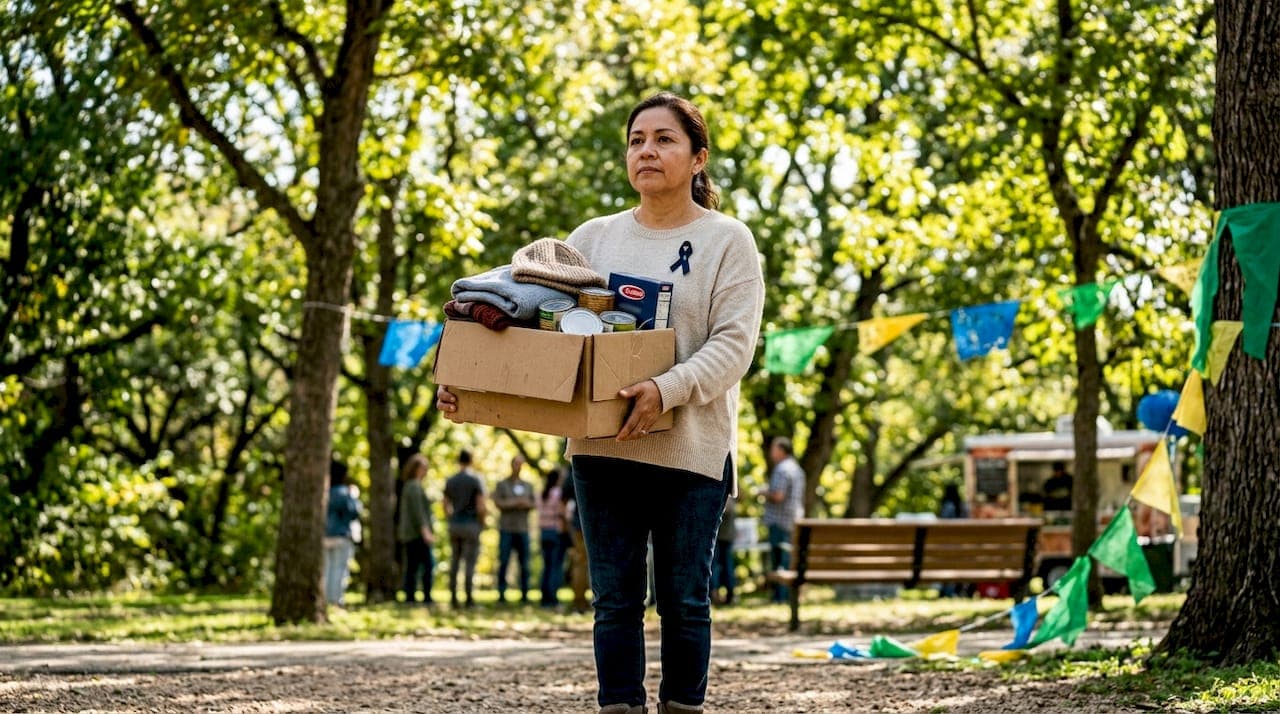
Donating to homeless people is defined as contributing money, goods, or time to organizations that provide shelter, food, and essential services to individuals experiencing homelessness. The most effective approach in Texas is giving financially to nonprofits connected to local support systems like the 211 hotline and Coordinated Entry, the standardized intake process used by most HUD-funded communities to prioritize housing assistance. Organizations such as Hopeforwardfoundation direct 83% of funds raised directly to assistance programs, making every dollar count. Choosing the right charity for homeless support means your contribution reaches real families, not administrative overhead.
How to donate to homeless assistance programs that actually work
The backbone of Texas homeless services is a coordinated infrastructure built around two key systems. The first is the 211 hotline, a free, confidential, 24/7 service that connects individuals to emergency shelter, food, healthcare, and housing programs. The second is Coordinated Entry, a standardized intake process that prioritizes homeless individuals for programs like Rapid Re-Housing and Permanent Supportive Housing based on assessed vulnerability.
Nonprofits that operate within this infrastructure stretch your donation further. They avoid duplicating services already provided by other agencies. They also feed your contribution into an evidence-based system rather than an isolated effort.

Pro Tip: Before you give, ask any nonprofit directly whether they participate in your local Coordinated Entry system. If they do, your donation is far more likely to reach the people who need it most.
When you donate food to homeless programs or contribute financially, the impact multiplies when the receiving organization is plugged into these systems. A single donation can fund a night of housing, a meal, or an ID document that unlocks access to employment and benefits.
- 211 hotline: Connects individuals to shelter, food, and healthcare 24/7 at no cost
- Coordinated Entry: Standardized assessment that matches people to the right housing program
- Rapid Re-Housing: Short-term rental assistance to move people off the streets quickly
- Permanent Supportive Housing: Long-term housing paired with ongoing support services
How do you identify reputable charities for homeless support in Texas?
Reputable organizations report measurable outcomes, not just intentions. A strong charity for homeless support publishes numbers like nights of housing provided, meals served, and individuals helped each year. For example, Housing Forward provided 212,948 nights of housing and 97,239 meals in a single year, serving 2,586 clients. That level of transparency tells you exactly where your money goes.
Use these four steps to evaluate any organization before you give:
- Check measurable impact. Look for annual reports or impact pages that list specific outcomes, such as housing nights, meals served, or families stabilized.
- Verify tax-exempt status. Confirm the organization holds 501(c)(3) status through the IRS Tax Exempt Organization Search tool. This also qualifies your donation for a federal tax deduction.
- Confirm Coordinated Entry participation. Organizations integrated with Coordinated Entry use donations within an evidence-based system, reducing waste and duplication.
- Review their wish lists before donating goods. Calling before donating physical items avoids excess inventory and administrative cost for the nonprofit.
Tax incentives make giving even more worthwhile. Some states offer dollar-for-dollar tax credits for donations to eligible homeless support programs. The Homeless ID Project, for instance, operates under a model where each ID funded costs approximately $16, and donors can apply credits up to $987 for joint filers or $495 for individuals. Texas donors should check current state-level incentives with a tax advisor to understand what applies locally.
Pro Tip: Sign up for an organization's email newsletter after your first donation. Impact updates keep you informed and connected to the real-world results of your giving.
Avoid organizations that cannot answer basic questions about their programs, refuse to share financial statements, or pressure you to give immediately without time to research. Legitimate homeless assistance programs welcome scrutiny.
Step-by-step guide to donating money to homeless organizations
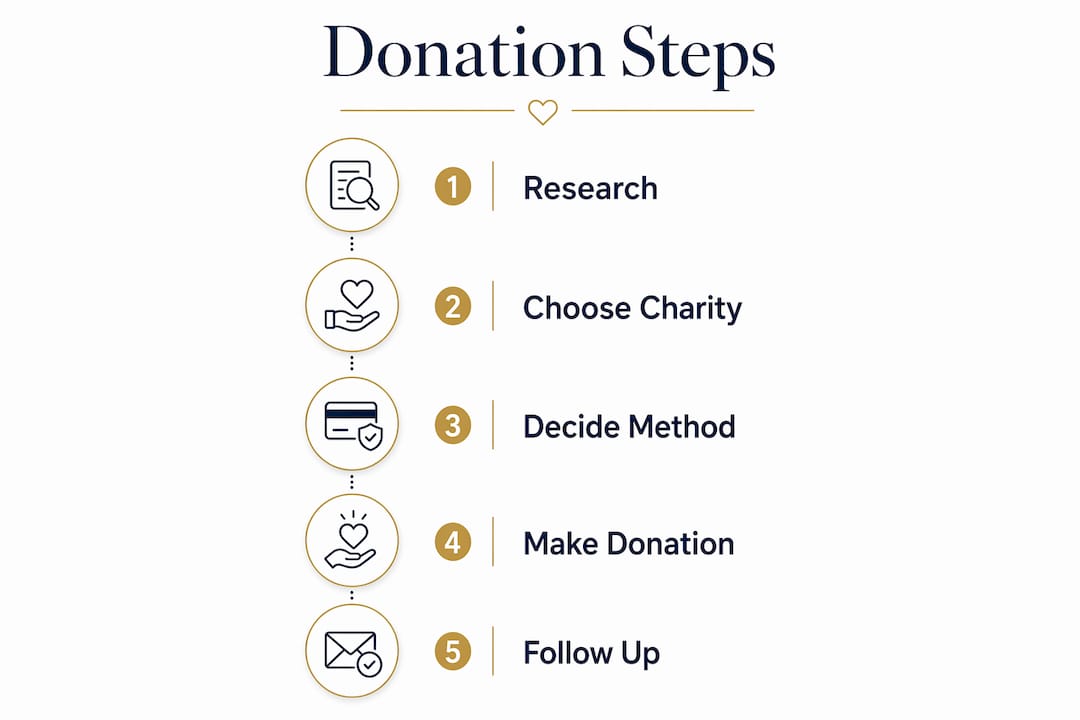
Giving financially is the most flexible and efficient way to support homeless services. Cash donations let nonprofits purchase exactly what they need, when they need it. Follow these steps to give confidently.
- Research local nonprofits. Search for Texas-based organizations through the IRS database, Charity Navigator, or your county's homeless coalition website. Prioritize those with published impact metrics and Coordinated Entry participation.
- Contact the organization. Call or email to confirm current funding needs. Some programs need operating funds; others need restricted gifts for specific services like emergency housing or meals.
- Choose your donation method. Most reputable nonprofits accept online giving through secure forms, checks by mail, or recurring monthly gifts. Monthly giving is especially valuable because it lets organizations plan programs in advance.
- Request a receipt. Any donation to a 501(c)(3) organization qualifies for a federal tax deduction. Ask for written confirmation immediately after giving.
- Stay engaged. Register for newsletters, follow the organization on social media, and track how your contribution is used over time.
| Donation method | Best for | Key benefit |
|---|---|---|
| Online giving form | One-time or recurring gifts | Fast, secure, and immediately receipted |
| Check by mail | Donors preferring paper records | Clear paper trail for tax purposes |
| Monthly recurring gift | Long-term supporters | Helps nonprofits plan programs reliably |
| Employer match | Workplace giving programs | Doubles the impact at no extra cost |
Recurring monthly gifts are the most impactful format for ways to support homeless programs. They give organizations financial stability to hire staff, maintain facilities, and serve clients without gaps in funding.
What mistakes should you avoid when donating to homeless people?
The most common mistake donors make is giving unsolicited goods. Dropping off bags of clothing or canned food without checking first creates real problems. Nonprofits face storage costs, sorting labor, and sometimes disposal fees for items they cannot use. Calling before donating physical items avoids excess inventory and administrative burden, freeing staff to focus on direct services.
A second mistake is giving cash directly to individuals on the street. This is not about judgment. It is about effectiveness. Cash given without connection to services rarely addresses the root causes of homelessness, which include lack of stable housing, mental health support, and employment access. Directing people to call 211 is the single most effective immediate action you can take when you encounter someone in need.
Donating through established nonprofits connected to local systems is not just more efficient. It is more respectful. It treats homelessness as a solvable community problem, not a personal failing. Every dollar given through a coordinated system carries the weight of an entire support network behind it.
Watch out for these common pitfalls:
- Unverified solicitations: Avoid giving to individuals or groups collecting on the street without clear nonprofit credentials.
- Goods without coordination: Always check an organization's current needs list before donating physical items.
- One-time thinking: Homelessness is a persistent issue. Recurring support creates more lasting change than a single gift.
- Ignoring overhead context: A nonprofit spending 15–20% on administration is healthy. Extreme low overhead can signal underfunded staff and weak programs.
Social isolation is a root cause of homelessness, and relational support is as important as financial aid. Your donation works best when it funds organizations that treat clients with dignity and build real human connections alongside housing and meals.
Key Takeaways
Donating to homeless people in Texas is most effective when you give financially to nonprofits integrated with Coordinated Entry and the 211 system, ensuring your contribution reaches those with the greatest need.
| Point | Details |
|---|---|
| Give through coordinated systems | Choose nonprofits participating in Coordinated Entry for maximum impact and efficiency. |
| Verify measurable outcomes | Look for published metrics like housing nights and meals served before committing funds. |
| Use recurring monthly gifts | Monthly donations give organizations the stability to plan and deliver consistent services. |
| Avoid unsolicited goods | Always check a nonprofit's current needs list before donating physical items. |
| Request tax receipts | Donations to 501(c)(3) organizations qualify for federal deductions; ask for written confirmation. |
Why I think most donors underestimate the power of systems
I have spent years watching well-meaning people drop off bags of clothes at shelters that already had more than they could store. The impulse is generous. The outcome is often a burden on the very people trying to help. What changed my thinking was learning how Coordinated Entry actually works. It is not bureaucracy for its own sake. It is a triage system that matches the most vulnerable people to the right housing program at the right time.
The donors who make the biggest difference are not always the ones who give the most money. They are the ones who give to organizations that know exactly how to use it. A $50 monthly gift to a nonprofit fully integrated with local systems can fund more real change than a $500 one-time check to an organization operating in isolation.
What I find most underappreciated is the dignity factor. Personal connection and respect are often the most immediate gifts you can offer alongside financial support. The best organizations understand this. They train staff and volunteers to treat every client as a person with a name and a story, not a case number. When you choose where to donate, look for that culture. It signals an organization that will use your money the way you intended.
Systemic giving is not cold or impersonal. It is the most compassionate choice you can make.
— Louie
Hopeforwardfoundation's Dream Home Sweepstakes funds real housing help
Hopeforwardfoundation is a Texas-based nonprofit that directs 83% of funds raised directly to emergency housing assistance and transitional support for families facing homelessness. Every contribution funds real housing solutions for families at risk of losing their homes.
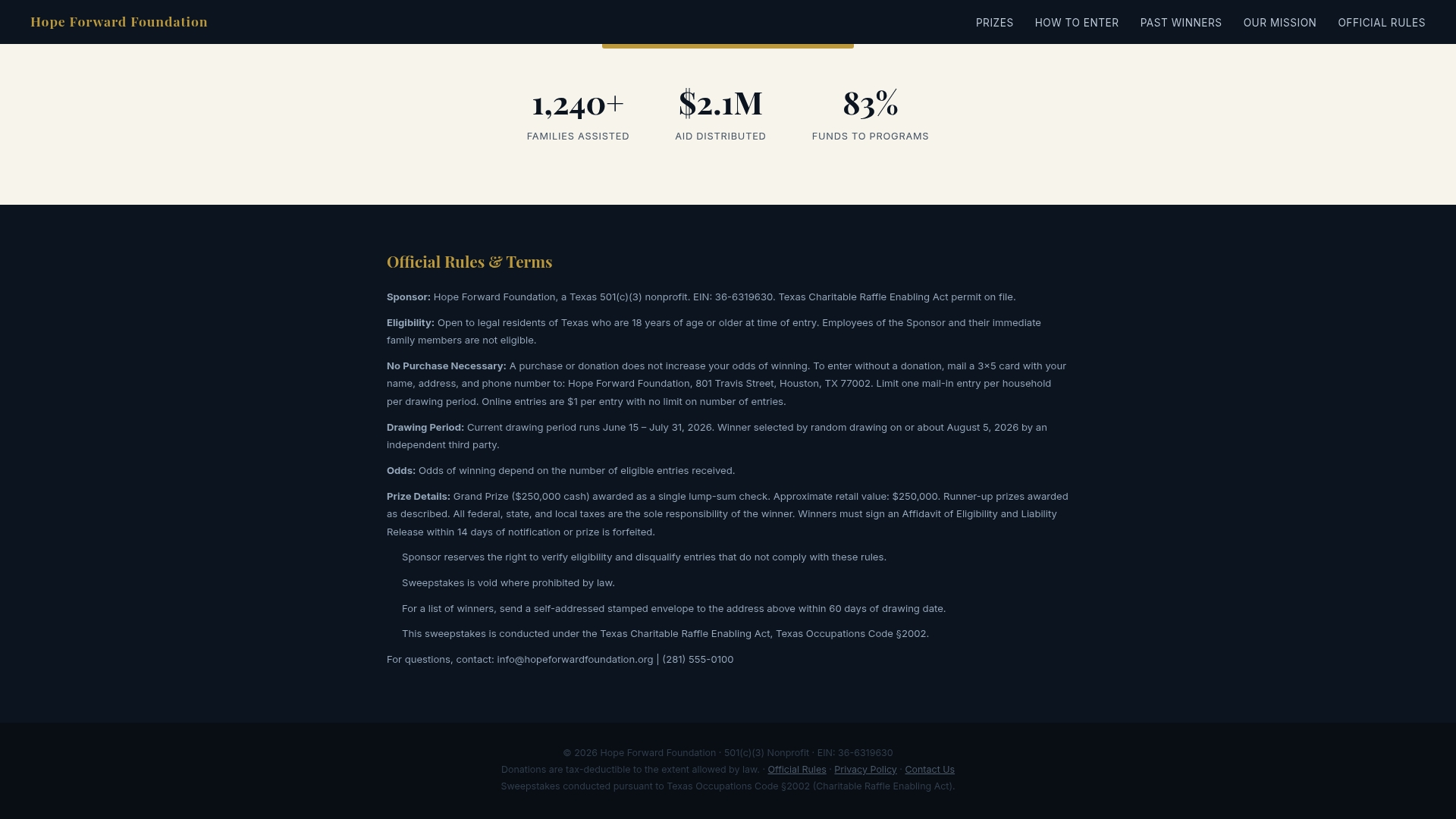
The Dream Home Sweepstakes gives you a chance to win a grand cash award of $250,000 while directly supporting housing programs for Texas families. Each entry funds the work that keeps vulnerable families housed. You contribute to a transparent, community-focused mission, and you stand a chance to change your own life at the same time. Visit Hopeforwardfoundation to learn more and enter today.
FAQ
What is the best way to donate to homeless people in Texas?
The most effective approach is giving financially to a nonprofit integrated with Coordinated Entry and the 211 system. These organizations use your donation within an established support network that prioritizes the most vulnerable individuals.
How do I know if a homeless charity is legitimate?
Verify 501(c)(3) status through the IRS Tax Exempt Organization Search, check for published impact metrics, and confirm the organization participates in local Coordinated Entry programs.
Can I get a tax deduction for donating to homeless organizations?
Yes. Donations to 501(c)(3) nonprofits qualify for federal tax deductions. Some states also offer dollar-for-dollar tax credits for eligible charitable contributions to homeless assistance programs.
Is it better to donate money or goods to homeless shelters?
Financial donations are generally more flexible and efficient. Goods donations are only effective when coordinated in advance with the organization's current needs list, since unsolicited items create storage and sorting burdens.
What does the 211 hotline do for homeless people?
Dialing 211 connects individuals to local emergency shelter, food, healthcare, and housing programs 24/7 at no cost. It serves as the primary gateway to Coordinated Entry systems across Texas and the nation.